Blog
Can Poor Drainage Damage Your Lawn Over Time?
There’s a reason some lawns in Sedalia, Missouri never seem to fully recover no matter how much maintenance gets done.
The grass gets reseeded. Fertilizer gets added. Brown patches disappear for a while, then come back again after another stretch of rain. Homeowners replace sections of lawn over and over thinking the issue is the grass itself, when the real problem is happening underneath.
Water is staying in the yard too long.
A lawn does not need visible flooding to have drainage problems. In fact, some of the worst drainage damage happens slowly enough that people stop noticing it. The yard just becomes harder to maintain every year. Certain areas stay soft after storms. Mowing starts leaving ruts. Grass thins out near the same low spots repeatedly. Eventually, parts of the lawn stop growing well altogether.
And once that cycle starts, normal lawn care stops being enough to fix it.
The Lawn Usually Warns You Before It Starts Failing
Drainage problems almost never appear all at once.
Most yards give subtle signs first:
Grass growing unevenly
Areas staying darker green than the rest
Soil feeling soft underfoot
Water collecting beside patios
Thin grass near downspouts
Patches that struggle every spring
A lot of homeowners ignore those signs because the lawn still looks “mostly fine” overall.
But oversaturated soil changes the growing conditions underneath the turf long before the damage becomes obvious from the street.
Too Much Water Can Suffocate Grass
People usually associate lawn damage with drought, not excess water.
But grass roots still need airflow underground. When the soil stays wet constantly, oxygen levels drop and the roots start weakening.
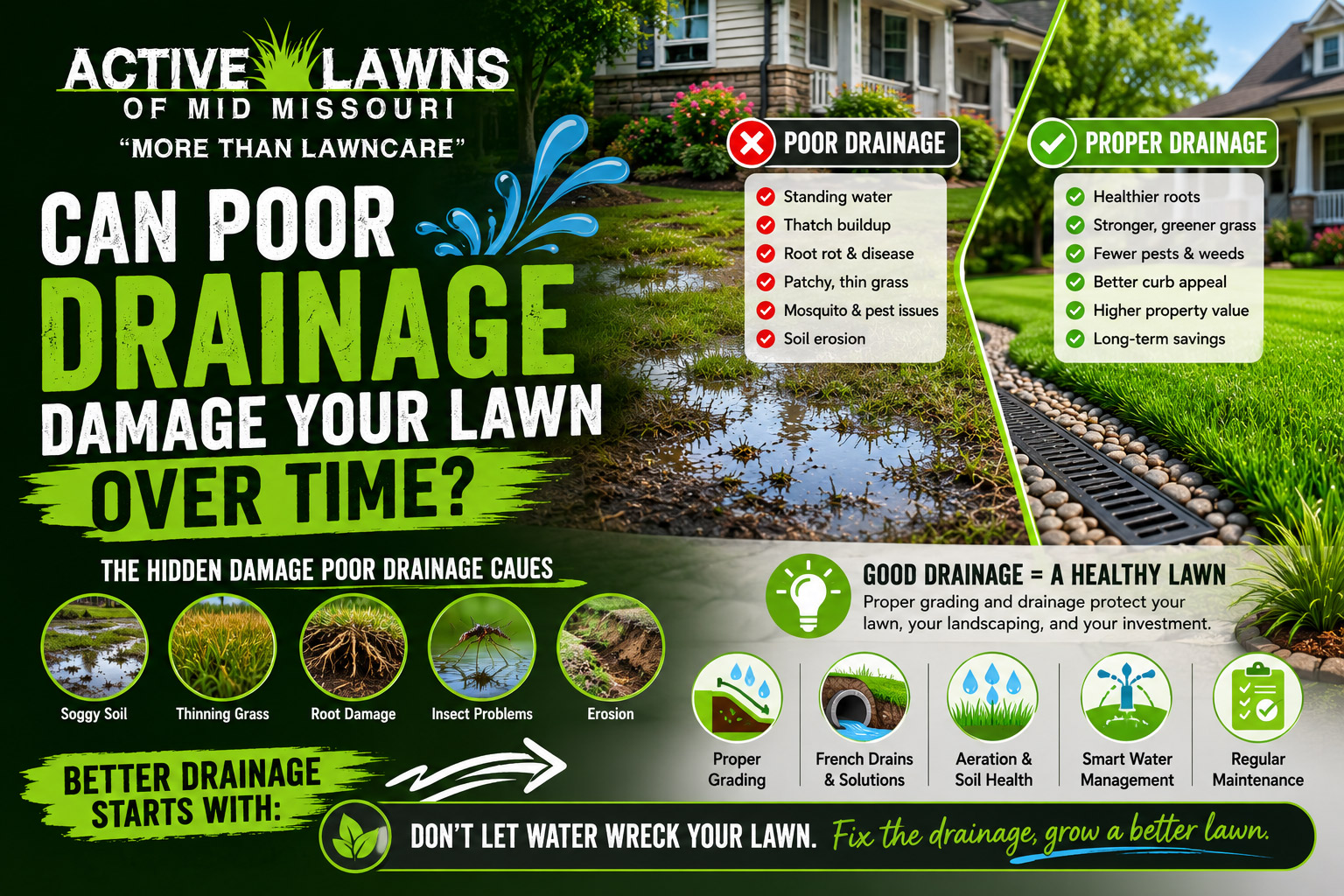
That is why lawns with poor drainage often develop:
The frustrating part is that homeowners often respond by watering more because the grass looks unhealthy, which makes the drainage issue even worse.
Some Parts of the Yard Are More Vulnerable Than Others
Drainage problems usually follow the shape of the property.
Low sections naturally collect runoff first. Areas near fences, patios, retaining walls, and downspouts often become problem zones because water gets trapped there repeatedly.
In Sedalia, Missouri, this becomes especially noticeable during long rainy stretches in spring when the ground never fully dries between storms.
One Small Low Spot Can Affect the Entire Lawn
A yard does not need major grading issues to develop drainage damage.
Sometimes a shallow dip is enough to create:
Repeated muddy areas
Dead grass patches
Mower rutting
Mosquito activity
Erosion during storms
Once those areas start weakening, they usually expand outward over time because the surrounding soil also stays wetter longer.
Drainage Problems Tend to Create More Problems
Poor drainage rarely stays isolated to one issue.
A lawn struggling with excess moisture often becomes more vulnerable across the board.
For example:
Grass weakens from oversaturated roots
Weeds begin filling thin areas
Soil compacts from excess moisture
Water drains even slower afterward
Lawn damage spreads further each season
That cycle is why neglected drainage issues become more expensive to fix later.
Many large lawn restoration projects actually begin as smaller drainage problems that were ignored for too long.
Clay Soil Makes Drainage Worse in Many Mid Missouri Yards
Some lawns naturally drain slower because of the soil underneath.
Clay-heavy soil is common in parts of Mid Missouri, and it tends to hold moisture longer than sandy soil. Once saturated, it becomes dense and compacted very quickly.
That creates conditions where:
Water sits near the surface
Grass roots struggle to spread
Foot traffic damages the lawn faster
Heat stress becomes more severe during summer
This is also why some homeowners feel like certain sections of their lawn stay “spongy” for days after rain while other areas dry normally.
Lawn Care Alone Cannot Always Fix Drainage Damage
One of the biggest misconceptions homeowners have is assuming routine lawn maintenance will eventually solve the issue.
But mowing, fertilizing, and reseeding cannot permanently fix drainage problems if water movement in the yard never changes.
Sometimes the property may need:
Regrading
Aeration
Drainage channels
Downspout extensions
Soil correction
French drains
Without addressing the actual water issue, the lawn often keeps cycling through the same damage patterns year after year.
The Damage Is Not Always Limited to the Grass
Poor drainage eventually starts affecting more than the lawn itself.
Over time, excess moisture can contribute to:
Mulch washout
Landscape bed erosion
Standing water near foundations
Patio settling
Fence deterioration
Increased mosquito activity
That is why drainage issues should not be treated as a cosmetic lawn problem only. Water affects the entire property once it stops moving properly.
What Homeowners Should Pay Attention To After Rain
The best time to evaluate drainage is usually right after a heavy storm.
That is when homeowners can see:
Where water collects
Which areas stay saturated longest
Whether runoff moves toward the house
Which parts of the lawn erode first
Those patterns usually reveal much more than looking at the yard during dry weather.
FAQs About Lawn Drainage Problems
Can poor drainage kill grass over time?
Yes. Oversaturated soil weakens grass roots and limits oxygen underground, which can eventually kill sections of the lawn.
Why does my yard stay muddy for days after rain?
This often happens because of poor drainage, compacted soil, low spots, or clay-heavy ground conditions.
Can drainage problems cause weeds?
Yes. Weak, thin turf caused by excess moisture creates opportunities for weeds to spread more easily.
Is standing water always a grading problem?
Not always. Standing water can also be caused by compacted soil, runoff concentration, or poor drainage flow.
Will reseeding fix drainage damage?
Not permanently if the underlying drainage issue remains. New grass often struggles again once the soil becomes oversaturated.
Conclusion
Poor drainage slowly changes the condition of a lawn underneath the surface long before the damage becomes severe enough to notice immediately. What starts as a soft patch or recurring muddy area can eventually weaken grass roots, compact the soil, encourage weeds, and create larger property drainage issues over time. The longer excess moisture stays trapped in the yard, the harder it becomes for healthy turf to recover consistently.
For homeowners in Sedalia, Missouri, drainage problems often become more noticeable during periods of heavy seasonal rain and changing soil conditions throughout Mid Missouri. Active Lawns of Mid Missouri works with homeowners on lawn care, grading, and outdoor property improvement services designed to help create healthier and more manageable yard conditions long-term.

Our Services
Helpful Links
© 2025 All Rights Reserved | Active Lawns of Mid Missouri
Website Done By: LocalEyes