Blog
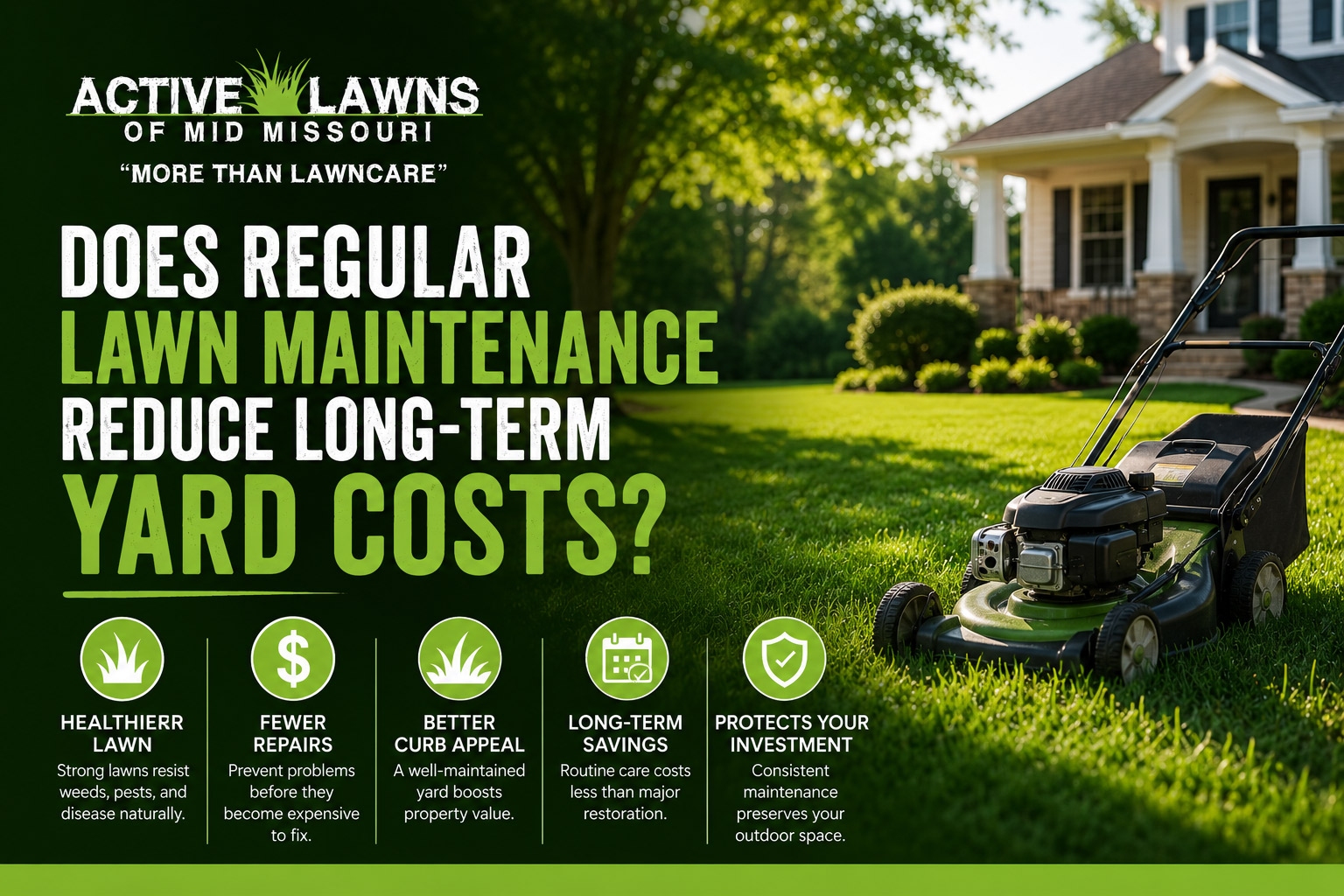
Does Regular Lawn Maintenance Reduce Long-Term Yard Costs?
Introduction
Many homeowners see lawn maintenance as a recurring expense focused mainly on appearance. Mowing, trimming, fertilization, and seasonal cleanup are often viewed as cosmetic services designed to keep the property looking neat. However, regular lawn maintenance can also affect the long-term condition of the yard itself, which may influence future repair and restoration costs over time.
Lawns that receive consistent care often develop healthier root systems, stronger grass growth, and fewer large-scale problems that require expensive correction later. On the other hand, neglected lawns may slowly develop issues such as weed overgrowth, thinning turf, drainage concerns, soil compaction, or pest damage that become more difficult and costly to reverse.
For homeowners in Sedalia, Missouri, changing Mid Missouri weather conditions can place additional stress on lawns throughout the year. Heat, seasonal rainfall, drought periods, and rapid weed growth all affect how well a lawn holds up over time. Understanding how regular maintenance influences long-term yard expenses helps homeowners evaluate lawn care as more than just short-term upkeep.
Lawn Problems Often Start Small
Most major lawn issues do not appear overnight. Problems usually begin gradually and become more noticeable when maintenance becomes inconsistent for extended periods.
For example:
Weeds slowly spread into thin turf areas
Soil compaction limits healthy root growth
Drainage problems weaken grass coverage
Pest activity increases in stressed lawns
Bare patches expand over time
Routine lawn care helps identify and address these problems earlier before larger restoration work becomes necessary.
Preventative Lawn Care vs Corrective Lawn Repair
There is a major difference between maintaining a healthy lawn and trying to repair a damaged one later.
Preventative lawn maintenance commonly includes:
Routine mowing
Fertilization
Seasonal weed control
Aeration
Overseeding
Basic cleanup
Corrective lawn restoration may require:
Extensive reseeding
Sod replacement
Soil correction
Drainage regrading
Pest treatment recovery
Large weed removal efforts
Corrective work is often more labor-intensive and expensive because the lawn has already deteriorated significantly.
Consistent Mowing Helps Protect Lawn Health
Many homeowners focus on mowing mainly for appearance, but mowing habits also affect the health and durability of the grass itself.
Proper Mowing Encourages Stronger Turf
Routine mowing helps:
Promote even grass growth
Reduce weed opportunities
Improve sunlight distribution
Encourage thicker turf coverage
Thicker grass naturally helps crowd out weeds and reduces the likelihood of bare soil exposure.
Irregular Mowing Can Stress the Lawn
Allowing grass to grow excessively before cutting it very short can create unnecessary stress.
This may lead to:
Over time, stressed lawns may require more aggressive treatments to recover.
Weed Control Reduces Future Lawn Recovery Costs
Weeds are one of the most common lawn problems in Sedalia, Missouri due to seasonal growing conditions and changing moisture levels throughout Mid Missouri.
Weeds Compete With Healthy Grass
Uncontrolled weeds compete with turfgrass for:
Water
Nutrients
Sunlight
Root space
As weeds spread, healthy grass often weakens and thins out.
Early Weed Management Is Usually More Affordable
Smaller weed problems are generally easier to manage than widespread infestations.
Regular lawn care programs often include:
Pre-emergent weed control
Spot treatments
Seasonal monitoring
Turf-strengthening treatments
Preventative treatments often reduce the need for more extensive lawn rehabilitation later.
Soil Health Plays a Major Role in Long-Term Lawn Costs
Healthy grass depends heavily on healthy soil conditions. Unfortunately, soil problems are not always immediately visible from the surface.
Compacted Soil Limits Grass Growth
Over time, foot traffic, mowing equipment, and weather conditions can compact the soil beneath the lawn.
Compacted soil restricts:
Root expansion
Water absorption
Nutrient movement
Oxygen circulation
When this happens, lawns may become thin, uneven, or more vulnerable to drought stress.
Aeration Helps Prevent Larger Lawn Problems
Aeration is commonly used to loosen compacted soil and improve lawn performance.
Benefits of aeration include:
Better root development
Improved water penetration
Reduced surface runoff
Stronger turf density
Improved nutrient absorption
Regular aeration often helps reduce the likelihood of widespread turf decline over time.
Seasonal Lawn Care Helps Prevent Expensive Damage
Lawns experience different stresses throughout the year, especially in regions with changing seasonal conditions like Sedalia, Missouri.
Spring Lawn Maintenance
Spring services often focus on:
Fertilization
Weed prevention
Lawn evaluation
Early mowing schedules
This helps lawns recover from winter stress and prepare for the growing season.
Summer Lawn Stress Management
During summer, lawns may experience:
Heat stress
Drought conditions
Weed pressure
Insect activity
Consistent lawn maintenance during hot periods often helps prevent permanent turf damage.
Fall Recovery and Preparation
Fall lawn care is important because it supports root development before winter arrives.
Services commonly performed during fall include:
Overseeding
Aeration
Fertilization
Leaf cleanup
Skipping fall maintenance may weaken the lawn heading into the following growing season.
Neglected Lawns Often Require Larger Restoration Projects
When routine lawn maintenance is delayed for too long, the yard may eventually require more significant corrective work.
Common Restoration Services
Lawns that decline heavily may need:
Sod installation
Full reseeding
Soil replacement
Drainage correction
Extensive weed treatment
Erosion repair
These projects are typically more expensive than maintaining healthy turf consistently throughout the year.
Drainage Problems Can Become More Severe
Poor drainage is another issue that may worsen without regular yard maintenance.
Standing water can lead to:
Soil erosion
Grass die-off
Muddy areas
Root damage
Pest activity
Early grading adjustments or drainage improvements are often easier to manage before severe damage develops.
Comparing Routine Lawn Maintenance vs Lawn Restoration
Understanding the difference between maintenance and restoration helps homeowners evaluate long-term costs more realistically.
Routine care is not always about creating a perfect lawn. In many cases, it helps reduce the risk of larger property issues later.
How Homeowners Can Make Lawn Maintenance More Effective
Consistent lawn care works best when services are tailored to the property’s actual conditions rather than following a generic schedule alone.
Evaluate the Lawn Throughout the Year
Homeowners should monitor:
Weed growth patterns
Bare spots
Drainage issues
Soil compaction
Seasonal stress changes
Early attention often prevents problems from spreading further.
Match Lawn Care to Property Conditions
Some lawns require more intensive maintenance due to:
Heavy shade
Clay-heavy soil
Drainage limitations
High foot traffic
Pet activity
Adjusting lawn care based on property conditions helps improve long-term turf health more effectively.
FAQs About Lawn Maintenance and Long-Term Costs
Does regular lawn maintenance save money over time?
Routine lawn maintenance often helps reduce the likelihood of larger restoration expenses caused by weeds, soil problems, or turf damage.
Why do neglected lawns become expensive to repair?
Untreated lawn problems can spread gradually, eventually requiring reseeding, sod installation, drainage work, or major weed control treatments.
Is fertilization necessary for healthy grass?
Fertilization helps support turf growth and root strength, especially in lawns dealing with seasonal stress and nutrient depletion.
How does aeration help reduce lawn problems?
Aeration improves soil airflow, water absorption, and root growth, helping lawns stay healthier over time.
Can regular mowing improve lawn health?
Yes. Consistent mowing encourages thicker turf growth and helps reduce weed opportunities when done properly.
Conclusion
Regular lawn maintenance does more than improve curb appeal. Consistent mowing, weed control, fertilization, aeration, and seasonal care all contribute to healthier turf that is less likely to require expensive corrective work later. While lawn maintenance involves ongoing investment, it often helps homeowners avoid larger restoration costs caused by neglected soil conditions, weed spread, drainage problems, and turf decline.
For homeowners in Sedalia, Missouri, changing seasonal conditions make ongoing lawn care especially important for maintaining strong and healthy grass throughout the year. Active Lawns of Mid Missouri works with homeowners on lawn maintenance and outdoor property services designed to support healthier lawns and more manageable outdoor spaces across Mid Missouri.

Our Services
Helpful Links
© 2025 All Rights Reserved | Active Lawns of Mid Missouri
Website Done By: LocalEyes