Blog
When Does Landscaping Become a Better Investment Than DIY?
Introduction
Many homeowners begin outdoor improvement projects with the idea of handling the work themselves. Planting flowers, spreading mulch, trimming shrubs, or building small garden areas can seem manageable at first, especially with the number of online tutorials and home improvement guides available today. For smaller projects, DIY landscaping can sometimes work well when homeowners have enough time, tools, and experience.
However, landscaping projects often become more complicated once grading issues, drainage problems, plant selection, irrigation concerns, or large-scale yard transformations are involved. Some homeowners eventually realize they are spending more money correcting mistakes, replacing damaged plants, or renting equipment than they originally expected.
For property owners in Sedalia, Missouri, landscaping conditions can also vary throughout the year because of Mid Missouri weather patterns, soil conditions, drainage challenges, and seasonal plant stress. Understanding when professional landscaping becomes a better long-term investment than DIY work helps homeowners decide which projects are practical to handle alone and which may benefit from professional planning and execution.
Small DIY Landscaping Projects Often Work Well
Not every landscaping project requires professional involvement. Some smaller outdoor improvements are relatively manageable for homeowners willing to invest the time and effort.
Projects Many Homeowners Handle Successfully
DIY landscaping is often practical for:
Planting flowers
Mulch refreshing
Small decorative beds
Basic shrub trimming
Seasonal cleanup
Minor garden maintenance
These projects usually involve limited risk and lower material costs if mistakes occur.
DIY Can Be Helpful for Routine Maintenance
Some homeowners in Sedalia, Missouri prefer handling regular outdoor upkeep themselves because it allows flexibility and gradual improvements over time.
Routine DIY maintenance may include:
Watering
Weeding
Lawn edging
Leaf cleanup
Small seasonal planting updates
For homeowners who enjoy outdoor work, these tasks can remain manageable without requiring large equipment or extensive planning.
Larger Landscaping Projects Often Involve More Complexity Than Expected
Many landscaping projects appear straightforward initially but become significantly more involved once excavation, grading, drainage, or structural features enter the process.
Drainage Problems Are Commonly Misdiagnosed
Poor drainage is one of the most common reasons landscaping projects fail over time.
Homeowners may notice:
Standing water
Soil erosion
Dying grass
Muddy areas
Water pooling near foundations
Simply adding plants or decorative materials often does not solve the underlying grading or drainage issue.
Professional landscaping projects may require:
Addressing these problems correctly often requires more than basic DIY tools.
Equipment and Labor Can Change the Cost Equation
One reason some landscaping projects become better investments professionally is the amount of labor and equipment involved.
DIY Equipment Costs Add Up Quickly
Larger projects may require renting or purchasing:
Tillers
Skid steers
Excavators
Dump trailers
Soil compactors
Trencher equipment
In addition to rental costs, homeowners must also learn how to operate the equipment safely and efficiently.
Labor Demands Increase on Larger Properties
Large landscaping projects can become physically demanding very quickly.
Projects involving:
Heavy soil movement
Rock installation
Retaining wall preparation
Large planting areas
Drainage excavation
often require substantial labor hours that homeowners may underestimate initially.
Plant Selection and Placement Affect Long-Term Results
Landscaping is not only about appearance during installation. Long-term plant health and growth patterns also matter.
Poor Plant Placement Creates Future Problems
Incorrect plant selection can lead to:
Overgrowth near structures
Excessive shade coverage
Root damage
Drainage interference
Seasonal plant failure
Some plants may initially look appealing but struggle with local soil conditions or seasonal weather in Sedalia, Missouri.
Professional Planning Often Improves Longevity
Well-designed landscaping plans usually consider:
Sun exposure
Water drainage
Soil conditions
Seasonal growth patterns
Long-term maintenance requirements
This helps reduce the likelihood of expensive plant replacement or redesign later.
Time Commitment Is Often Overlooked
One of the biggest differences between DIY landscaping and professional landscaping is how much time the project actually requires.
DIY Projects Frequently Take Longer
Many homeowners underestimate:
Preparation work
Material hauling
Soil correction
Cleanup time
Rework caused by mistakes
Weekend landscaping projects sometimes extend into weeks or even months depending on project size.
Professional Crews Improve Efficiency
Professional landscaping crews typically complete projects faster because they already have:
Equipment access
Material coordination
Labor teams
Site preparation experience
This can be especially important for larger outdoor projects with seasonal deadlines.
Landscaping Mistakes Can Become Expensive Later
Some DIY landscaping issues are relatively easy to fix, while others create long-term property problems.
Common DIY Landscaping Mistakes
Homeowners sometimes encounter issues such as:
Incorrect grading
Poor drainage flow
Uneven retaining areas
Improper mulch depth
Overcrowded planting
Inadequate soil preparation
These mistakes may not become obvious immediately but can affect the property over time.
Drainage Errors Often Lead to Bigger Property Issues
Water management mistakes can eventually contribute to:
Foundation moisture problems
Lawn damage
Erosion
Plant loss
Standing water areas
For this reason, projects involving grading or drainage often benefit from more careful planning.
Some Landscaping Projects Usually Benefit From Professional Work
Certain types of landscaping work naturally involve more technical planning and coordination.
Projects Often Better Suited for Professionals
Professional landscaping is commonly beneficial for:
Large retaining wall preparation
Yard grading
Drainage correction
Excavation projects
Large-scale landscape redesigns
Slope stabilization
Commercial landscaping installations
These projects often involve structural planning, soil movement, or long-term drainage considerations.
DIY Landscaping Still Has Advantages in Certain Situations
Professional landscaping is not always necessary for every outdoor project.
DIY Works Well for Gradual Improvements
Some homeowners prefer:
Smaller ongoing projects
Seasonal garden updates
Personal creative control
Flexible budgeting
DIY landscaping may work especially well when projects remain relatively simple and manageable in scope.
Combining DIY With Professional Services
Some homeowners in Sedalia, Missouri choose a hybrid approach by:
Hiring professionals for grading or excavation
Handling planting work themselves
Using professionals for drainage correction
Managing routine maintenance independently
This approach can help balance budget flexibility with professional support where it matters most.
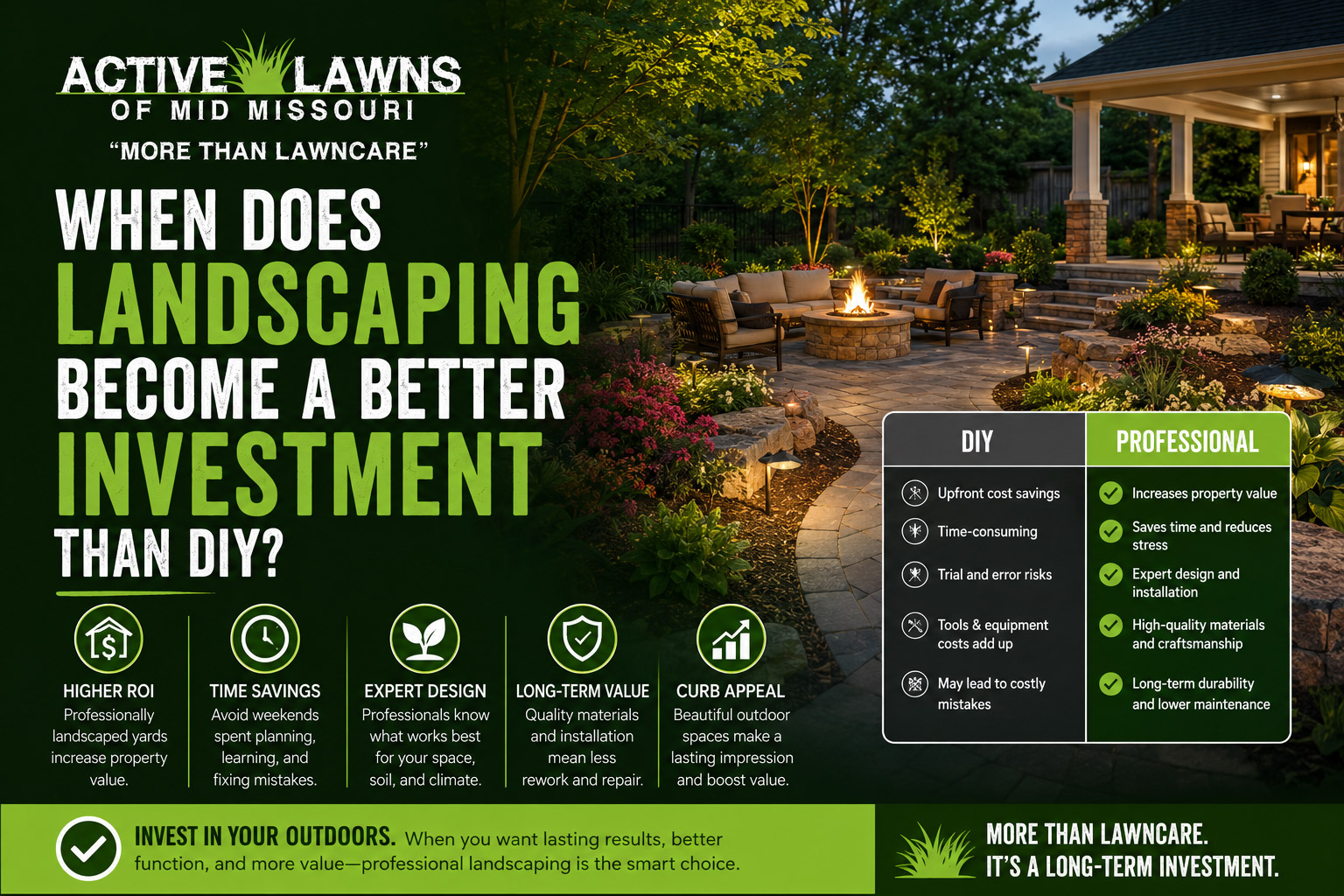
Comparing DIY Landscaping vs Professional Landscaping
The right option often depends on project complexity, available time, and long-term goals.
Neither option is automatically better in every situation. The right choice depends on the type of project and the homeowner’s expectations.
FAQs About DIY Landscaping vs Professional Landscaping
Is DIY landscaping cheaper?
DIY landscaping can reduce labor costs for smaller projects, but larger projects may become expensive once equipment, materials, and corrections are added.
When should I hire a professional landscaper?
Professional landscaping is often helpful for grading, drainage correction, excavation, retaining structures, and large-scale property redesigns.
Can bad landscaping affect drainage?
Yes. Incorrect grading and poor drainage planning can lead to standing water, erosion, and property damage over time.
Why do landscaping projects become expensive?
Costs often increase because of labor, soil preparation, drainage work, equipment needs, and material transportation.
Is professional landscaping worth it for large yards?
Large properties often benefit from professional planning and equipment access because the labor and layout complexity increase significantly.
Conclusion
DIY landscaping can work well for smaller maintenance projects and gradual outdoor improvements, especially for homeowners who enjoy hands-on yard work. However, larger landscaping projects often involve drainage planning, grading, soil preparation, and equipment demands that become far more complex than they initially appear. In many cases, professional landscaping becomes a better long-term investment when the project affects the structure, functionality, or long-term condition of the property itself.
For homeowners in Sedalia, Missouri, landscaping decisions are often influenced by seasonal weather, soil conditions, and long-term yard maintenance goals. Active Lawns of Mid Missouri works with homeowners on landscaping and outdoor property improvement projects designed to support healthier, more functional outdoor spaces throughout Mid Missouri.

Our Services
Helpful Links
© 2025 All Rights Reserved | Active Lawns of Mid Missouri
Website Done By: LocalEyes