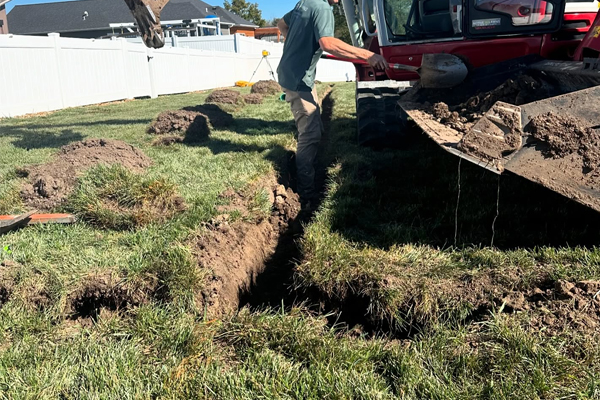
Smart Drainage Solutions for Yards Before Excavation in Sedalia
Preparing a Sedalia property for excavation requires more than clearing the site—it demands a functional drainage plan that prevents water accumulation, soil displacement, and long-term structural issues. Before any excavation begins, smart drainage solutions ensure the soil remains stable and safe to work with. This article outlines the strategies Sedalia homeowners should consider before breaking ground on major outdoor projects.
Why Drainage Matters Before Excavation
Excavation exposes soil layers that are normally protected from rain and runoff. Without proper drainage, water can collect around trenches, foundations, and utility lines, causing erosion, slope failure, and delays in construction. Sedalia’s clay-rich soil retains moisture longer than sandy or loamy soils, making pre-excavation drainage even more important for stability and safety.
Common Drainage Challenges in Sedalia Yards
Sedalia properties face their own set of water management issues due to local soil and grade patterns. Recognizing these challenges helps determine the most effective drainage solution.
Slow water absorption
Clay-heavy soil drains slowly, increasing the risk of pooling after storms or during irrigation.
Surface runoff
Improper grading sends water toward the excavation site or the home instead of away from it.
Saturated top layers
Extended rain periods keep the top few inches of soil saturated, limiting the workability of the ground.
Underground water movement
Hidden water channels or natural low points can cause unexpected seepage into trenches.
Smart Drainage Solutions to Implement Before Excavation
Different drainage strategies suit different site conditions. These solutions help prepare the yard for safe and efficient excavation.
Regrading for proper runoff
Correcting the slope ensures water flows away from excavation zones. Even small grade adjustments can redirect runoff and prevent pooling.
Temporary drainage channels
Shallow diversion trenches help move water toward safe discharge areas, keeping the work zone dry while excavation is underway.
French drains for heavy saturation
A French drain stabilizes consistently wet ground by capturing subsurface water and directing it away from the area. This solution works well in low sections of Sedalia yards.
Dry wells for standing-water zones
A dry well stores excess stormwater below ground until it naturally drains into surrounding soil. This prevents flooding around excavation points.
Sump systems for deep excavations
For deeper projects—such as basements or utility access trenches—a sump pump system prevents water from accumulating at the lowest point.
How to Assess Whether Your Yard Needs Drainage Before Excavation
Not every project requires extensive drainage work, but several indicators suggest that pre-excavation water management is necessary.
Standing water after rain
Soggy patches that take days to dry
Soil that compacts easily or feels spongy underfoot
Visible erosion or mulch displacement
Water movement toward the home during storms
Addressing these signs before excavation prevents project delays, safety hazards, and long-term structural problems.
FAQs
How far in advance should drainage be installed before excavation?
Most systems should be installed and tested at least one to two weeks before excavation to ensure proper water movement.
Can excavation equipment damage new drainage systems?
When planned correctly, the drainage system is positioned outside the active dig zone, preventing interference with machinery.
Will I need drainage even if the project is small?
Small projects can still require drainage if the soil retains water or the area is naturally low.
Does drainage installation require permits in Sedalia?
Large drainage improvements may require local review, depending on water redirection and site impact.
Can temporary drainage be removed after excavation?
Yes. Temporary channels, surface trenches, and pumps can be removed once grading and final structures are in place.
Conclusion
Drainage planning is a crucial step in protecting both the excavation site and the long-term integrity of the project. Sedalia’s soil conditions make smart drainage solutions even more important to prevent erosion, delays, and water intrusion. By addressing runoff and saturation before digging begins, homeowners ensure a safer, more efficient, and more stable excavation process.